Oct
Having a private gym at home is a real convenience. It allows us to work on our fitness in the comfort of our own home, without worrying about travelling to the gym or its opening hours. We are also not affected by restrictions – our home gym is open 24/7. And, of course, we have the space all to ourselves – nobody distracts us, we can play whatever music we like and enjoy our workout in peace.
What should we remember to make our workouts as effective as possible? Here are five basic rules to keep in mind!
Set Your Workout Goals
Think about which aspect of your physique you would most like to develop. Do you want to reduce body fat around your stomach, build your chest muscles, or develop your entire body evenly? These are important questions to ask yourself at the very beginning of your training journey. Your answers will influence the way you create your workout plan and help you measure your progress. To do this, it is a good idea to stand in front of a mirror and assess what you would most like to achieve.
It is also a good idea to take a photo of your physique and compare it with another photo taken two months after starting regular workouts. Remember – strength training is a sport that teaches patience and perseverance. Comparing your “before and after” photos can motivate you to work towards your next goals.

Develop a Workout Plan – Remember to Recover!
Regular exercise is essential if you want to achieve the best possible results and maintain them over time. Once we have answered the questions from the first point and know what we want to achieve through training, we should look at our exercises from the perspective of the muscles being trained.
For a muscle to develop, it needs a training stimulus as well as time to recover. During exercise, our muscles undergo microscopic damage, which is repaired during recovery, allowing the muscles to adapt and grow. Put simply, this process signals to our body that it needs to build more muscle tissue to cope with the load. There are two basic approaches that are particularly common in workout plans:
Regular exercise is essential if you want to achieve the best possible results and maintain them over time.
- FBW training – also known as Full Body Workout. In this approach, we train all major muscle groups during a single workout. FBW is often recommended in a schedule consisting of one training day followed by two days of rest. FBW is a good solution for people who want to develop their physique in a balanced, comprehensive way.
- Training individual muscle groups on specific days.
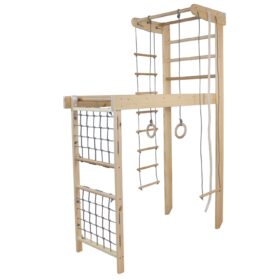
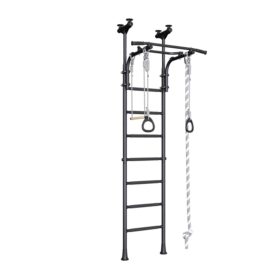
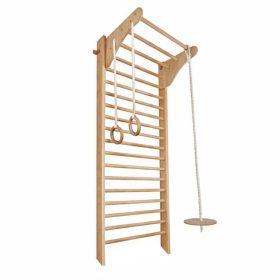
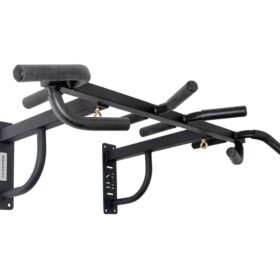
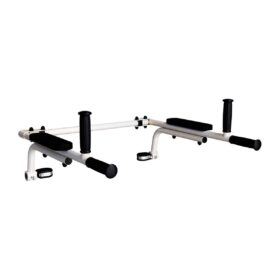
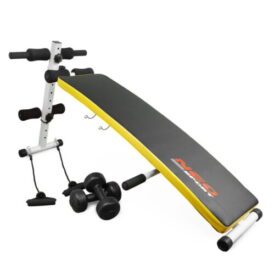
With this approach, each workout focuses on a particular muscle group. It is important to alternate the muscle groups being trained so that each part of the body has enough time to recover. For example, on Mondays and Thursdays, we can train the chest and biceps (e.g. using a barbell and a gymnastics bar), while on Tuesdays and Fridays we can focus on the legs and abdominal muscles (using a home gym set and gymnastic wall bars).
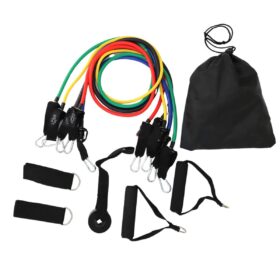
We can also incorporate shoulder and back exercises (resistance bands and a training bar), but it is worth remembering that training two large muscle groups during the same workout is generally not recommended.

During a single workout, we focus on a specific muscle group.
One of the most common mistakes made by people doing strength training is forgetting about recovery. This is the time our body needs to fully recover after a workout. During rest, muscles repair the microscopic damage caused by lifting weights and adapt to the training stimulus.
Every body is different, and workouts can vary in intensity. However, it is generally assumed that each muscle group needs at least 48 hours to fully recover.
Doing FBW workouts every day or planning training days incorrectly may result in losing body fat while muscle size remains at the same level. This can unfortunately lead to unsatisfactory results and discourage us from continuing our gym workouts.
Take Care of Your Diet
Once we have started training regularly, maintaining a proper diet should be the next step towards a healthy lifestyle. Without providing our body with the nutrients it needs, our muscles will not develop properly. This is a topic for a separate article, but protein is one of the key building blocks of muscle tissue.
A person who exercises should consume around 1 g of protein per kilogram of body weight per day (this amount may vary depending on their training goals). If we are unable to provide our body with this amount of protein through food alone, it may be worth considering appropriate supplementation.

Safety
In a home gym, we are usually on our own, so we should make sure that it contains only safe and stable sports equipment. Our range includes tested equipment such as resistance bands, outdoor gyms, home gym sets and much more.
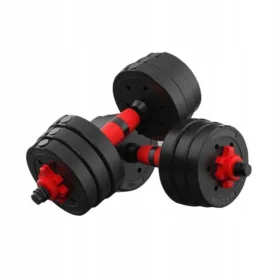
If you have just purchased a weight set and do not feel confident lifting a barbell on your own, make sure you have someone there to spot you. Another important aspect is how the exercises are performed – learn about the correct technique and maintain proper posture throughout each exercise. This will not only improve the effectiveness of your workouts but also help minimise the risk of injury.
Consistency
The gym is a sport for patient people. If you want the time you spend training to produce tangible results, you need to consistently provide your body with the stimulus it needs to build muscle. Remember that a fit physique is not built overnight, and without regular workouts, we will not achieve the results we are looking for.
That is why it is so important for fitness to become part of your lifestyle and for working out to be something you enjoy. After a few weeks, you will start to see real changes in your physique and fitness, which will motivate you to continue training.