Jun
Before purchasing a gym wall bars set, most people compare dimensions, height, accessories, and maximum load capacity. However, there is one factor that often turns out to be even more important than the specifications themselves — whether the walls, floor, and ceiling in your home are suitable for installation.
We regularly receive questions about installation in apartments with stretch ceilings, aerated concrete walls, lightweight partition walls, or other non-standard interior finishes. That’s why we have prepared a practical guide explaining which surfaces are best suited for installation and what you should check before mounting your gym wall bars.
Which type of mounting should I choose?
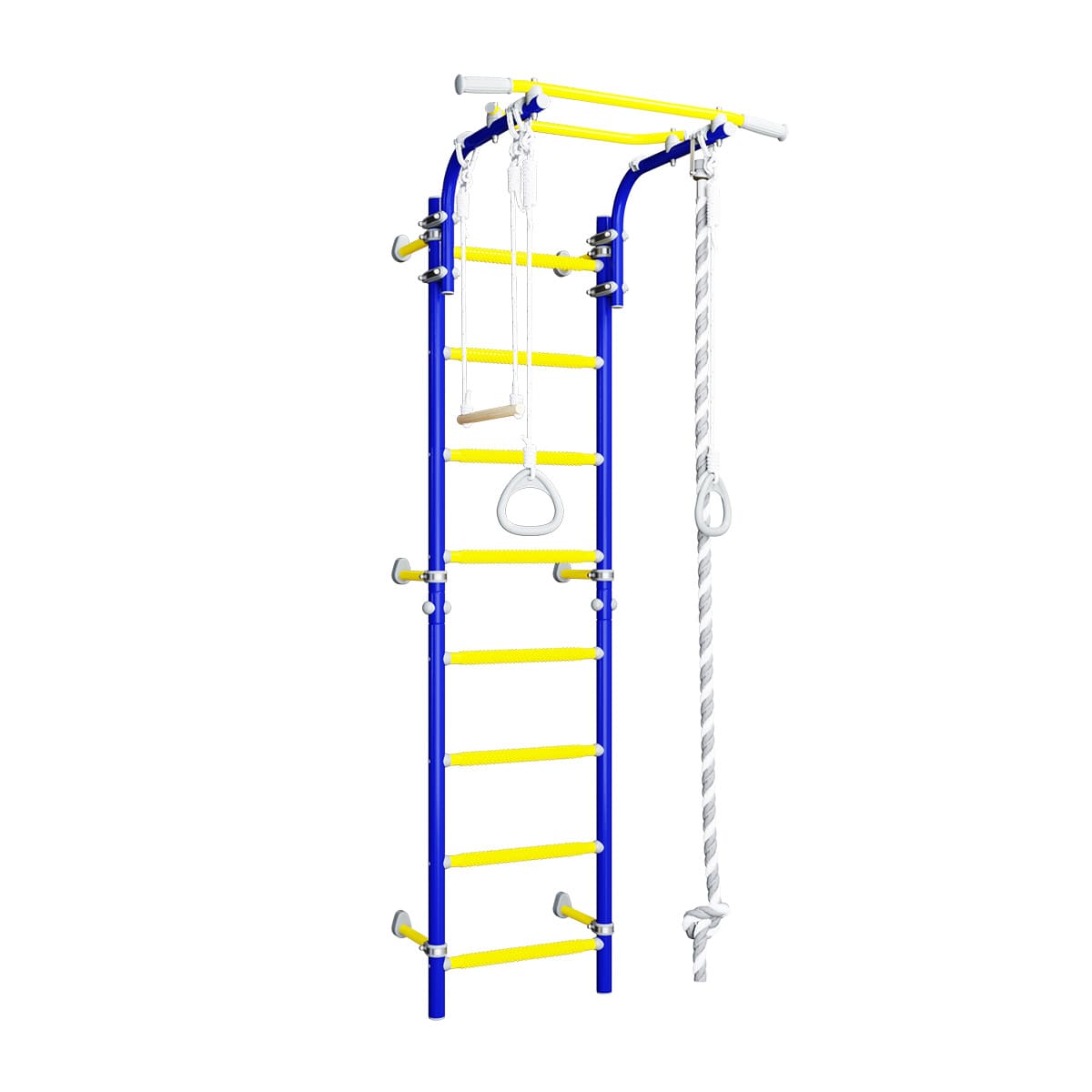
Wall-mounted installation
If you have a stretch ceiling, plasterboard (drywall) ceiling, or suspended ceiling, it is safer to choose a wall-mounted model.
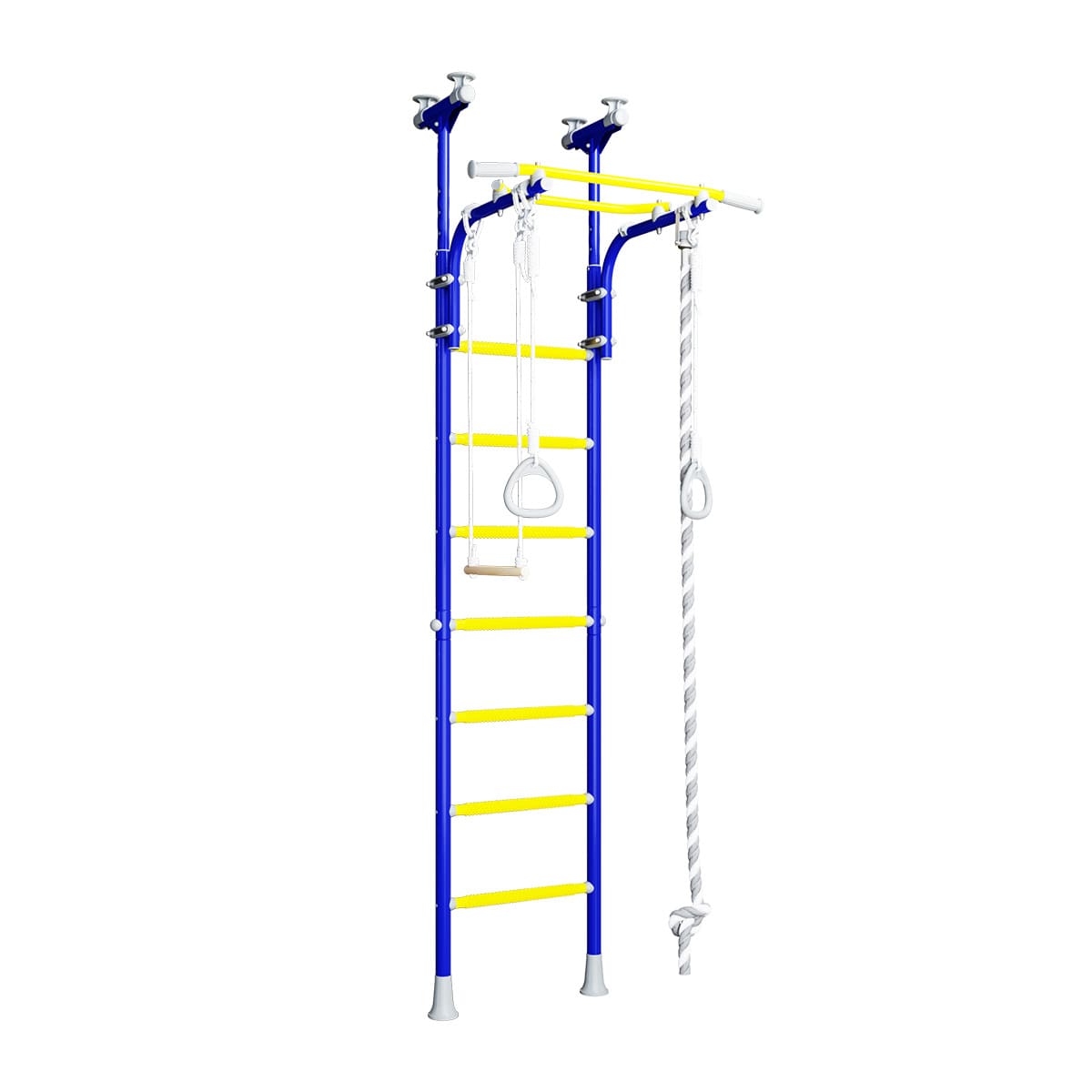
Pressure-mounted installation
Concrete ceiling and level floor — a pressure-mounted model will be a suitable choice.
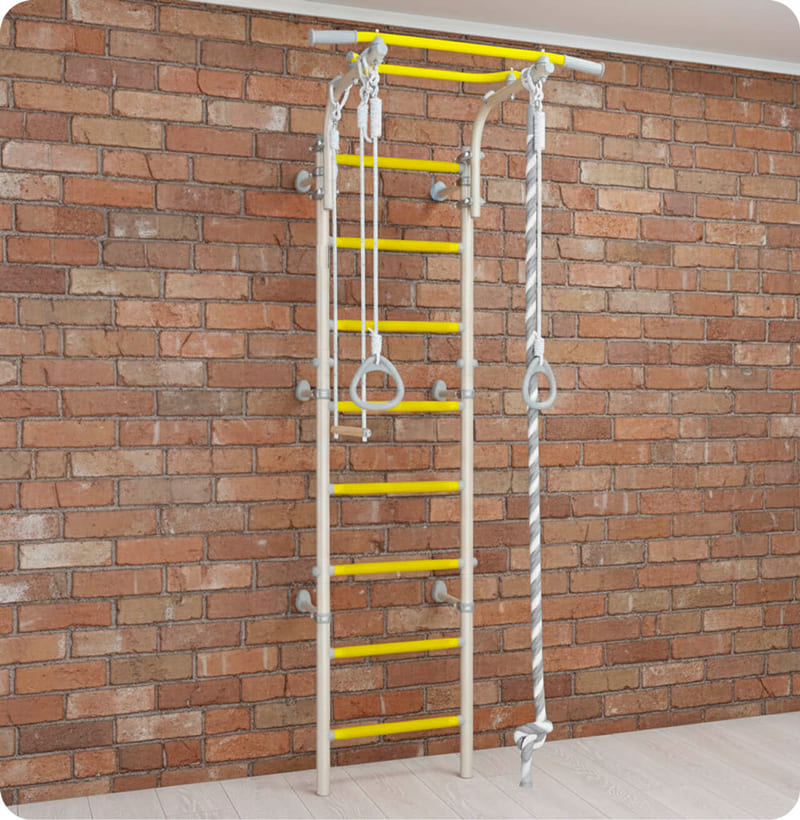
Concrete or solid brick wall
— wall-mounted installation works without any additional solutions.
Aerated concrete, hollow blocks, or plasterboard walls
— the material and appropriate mounting system must be checked in advance.
If you are unsure what material your walls and ceiling are made of, first determine the type of surface and then choose the appropriate mounting method.
Pressure-Mounted or Wall-Mounted Stall Bars: How to Choose?
| Parameter | Pressure-mounted wall bars | Wall-mounted wall bars |
|---|---|---|
| Installation method | Mounted between floor and ceiling | Fixed directly to the wall |
| Drilling required | Usually not required | Yes, installation requires drilling |
| Installation conditions | Stable ceiling and level, strong floor | Suitable load-bearing wall structure |
| With stretch ceiling | Possible only in some cases, with caution | Usually possible, depending on the wall |
| With plasterboard wall | Yes, provided the ceiling is solid (e.g. concrete) | Not recommended without reinforcement |
| When to choose | If you want installation without wall drilling | If the ceiling does not allow safe pressure mounting |
Next, we will discuss the types of mounting systems used in home sports equipment, which ceilings, walls, and floors are suitable for each installation type, and when it is better to choose pressure-mounted or wall-mounted systems.
We will also explain when a standard mounting kit is sufficient, when additional solutions are required, and when it is worth consulting a specialist.
Where to start? — Check the walls and ceiling
Before purchasing gymnastic wall bars, carefully check what materials your ceiling, floor, and walls are made of. Even if a model seems perfectly suitable in terms of specifications, it is the installation conditions that ultimately determine safety and feasibility.
First, answer two key questions:
What type of ceiling do you have?
— is it concrete, brick, wooden, stretch, or plasterboard? If the ceiling is not concrete, check whether it is possible to safely transfer the load to a concrete structural slab.
What are the walls made of?
— are they concrete or brick walls, or more “unusual” materials such as aerated concrete, hollow blocks, gypsum blocks, plasterboard, or lightweight partition systems?
The answers determine the installation method — whether the wall bars will be mounted using a pressure system between floor and ceiling or fixed to the wall.
Only after determining these conditions should you proceed to selecting parameters such as size, color, load capacity, and additional accessories.
Some models allow two installation methods depending on room conditions. For example, the Family model offers both mounting options.
Below we separately discuss ceilings and walls — where installation is straightforward and where special attention or caution is required.
Pressure-mounted wall bars: what ceiling and floor are suitable?
Pressure-mounted wall bars work on the principle of being “braced” between floor and ceiling without drilling into walls. Therefore, a stable base and safe load transfer are crucial.
CEILING
Concrete ceiling
The best solution for pressure-mounted installation is a concrete ceiling, including one finished with plaster. It provides maximum stability and load-bearing capacity under normal use conditions.
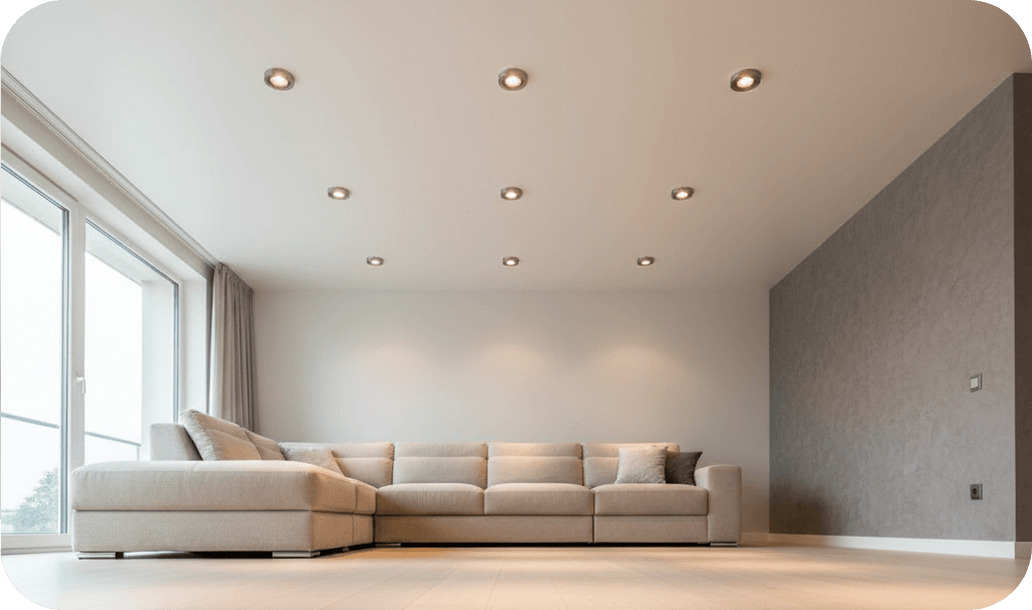
Stretch ceiling
Direct support against a stretch ceiling is not possible.
However, two solutions can be used:
- Pre-planned support points or mounting elements above the stretch ceiling so that the load is transferred to the structural slab. This is the most convenient solution if renovation is still in progress.
- Creating openings in the stretch ceiling at support points so that the structure rests directly on concrete (support height approx. 3.5 cm).
If the stretch ceiling is already installed, both solutions are still possible, but in practice wall-mounted bars are often a more comfortable and safer choice.
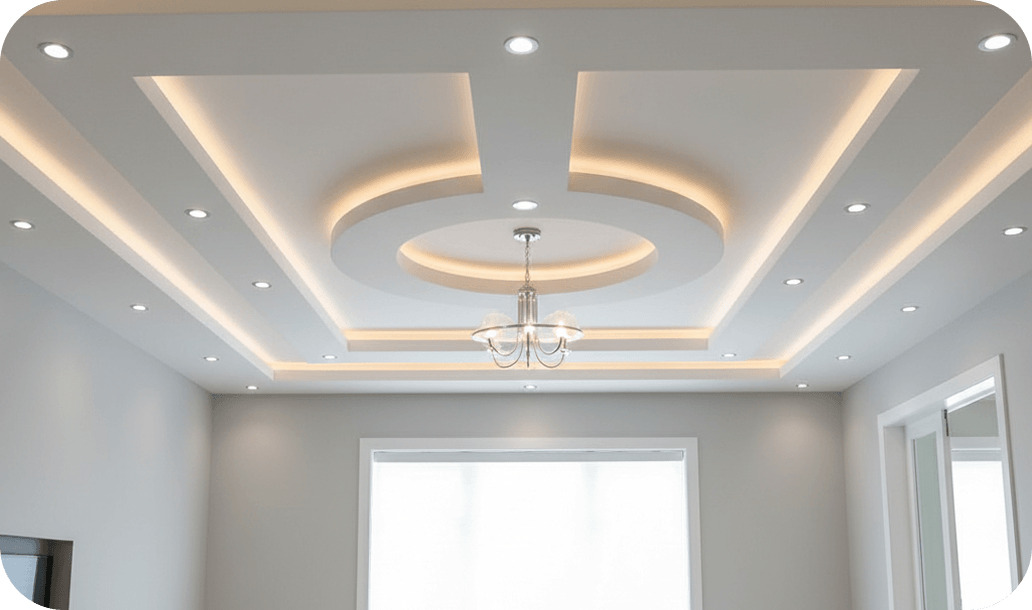
Plasterboard or suspended ceiling
The structure must not rest directly on plasterboard, as it is not designed to carry such loads — the material may crack or break.
Pressure-mounted installation is possible only if the support points transfer the load directly to the concrete slab above.
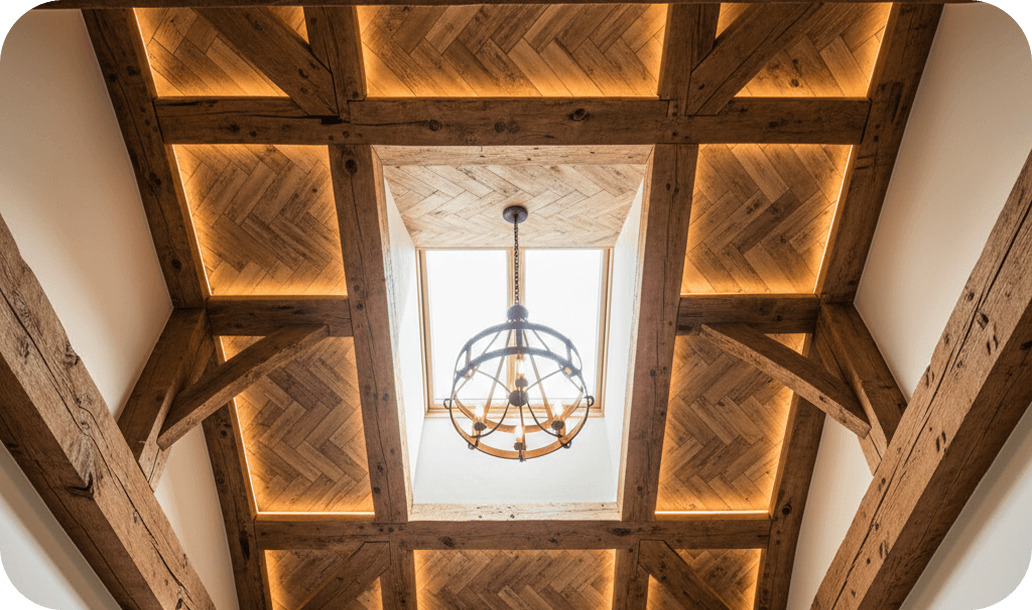
Wooden ceiling
In our guidelines, a wooden ceiling is not considered an optimal surface for pressure mounting. Due to point loads and structural variability, its behavior can be unpredictable, so alternative mounting solutions are recommended.
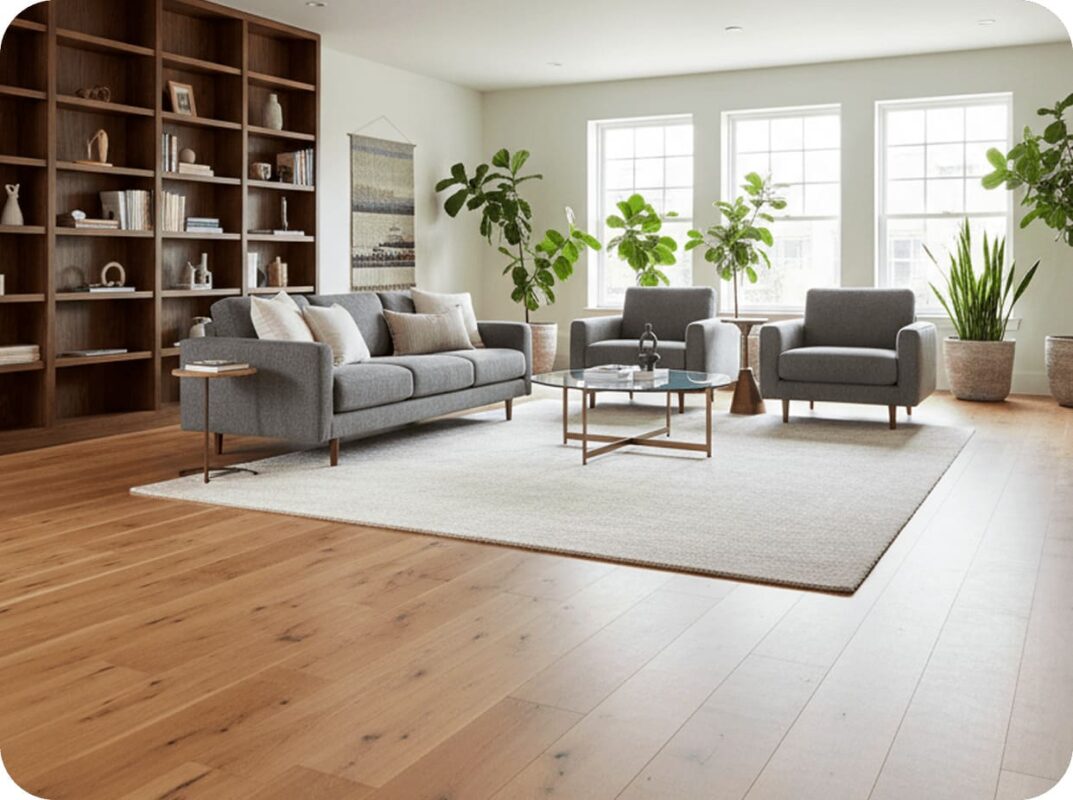
FLOOR
For pressure-mounted installation, surface evenness is crucial: according to the instructions, the permissible height difference between floor and ceiling is up to 5 mm. It is recommended to check this with a spirit level.
Wooden floor
Pressure mounting is possible only if the floorboards and substructure are stable and rigid and do not flex under load.
To reduce flexing and creaking on wooden, laminate, or parquet floors, a plywood base (16–20 mm thick) should be placed under the supports. If installed on joists, the plywood must rest on at least two joists for proper load distribution.
Lifehack
Quick check: stand at the intended installation spot and shift your weight from one leg to the other. If the floor noticeably flexes, it is better to avoid pressure-mounted models without further structural verification.
Wall-mounted gymnastic bars: suitable surfaces
Wall-mounted bars are fixed directly to the wall using brackets and fasteners, so wall type and load-bearing capacity are crucial.
The best solution is concrete or brick walls. For aerated concrete, hollow blocks, or lightweight partitions, special fasteners are required, and load capacity may need to be reduced.
| Wall material | Wall-mounted bars | Notes |
|---|---|---|
| Concrete / monolithic / concrete slab | ✅ Yes | Standard mounting systems |
| Solid brick | ✅ Yes | Standard fixings; recommended thickness ≥ 140 mm |
| Hollow brick / ceramic block | ⚠️ Conditional | Often requires special anchors or chemical anchors; sometimes through-bolting is better |
| Thin brick wall (5–6 cm edge) | ❌ No | Insufficient load-bearing capacity |
| Aerated concrete / gas block / SIPOREX | ⚠️ Conditional | Standard anchors usually fail; special fixings required; load often limited to 50–60 kg |
| Gypsum block (solid) | ⚠️ Conditional | Special gypsum anchors required; load often limited to 50–60 kg |
| Cinder block | ⚠️ Conditional | Depends on thickness; may require through-bolting |
| Lightweight aggregate block | ⚠️ Conditional | Depends on voids; long anchors may be needed |
| Wood / structural beam | ✅ Yes | Holds well with wood screws |
| Plasterboard wall | ❌ No | Not suitable |
| Plasterboard with concrete/brick behind | ⚠️ Complex | Possible but risky; reinforcement recommended |
| OSB 8–10 mm | ❌ No | Not suitable for loads |
| Silicate block | ❌ No | Too brittle for load-bearing mounting |
If you are unsure whether the wall is solid or hollow, consult the contractor or developer. In some cases, this can only be confirmed during drilling.
How to avoid mistakes when choosing installation location
Even if the walls and ceiling are suitable, an incorrectly chosen location may cause inconvenience — blocking access, colliding with doors, or interfering with furniture.
Free space zone
Leave at least 1 meter of free space around the wall bars.
Windows and heat sources
Do not install near windows, radiators, or heating elements.
Skirting boards and uneven floors
Check whether skirting boards or uneven flooring will affect stability.
Hidden installations
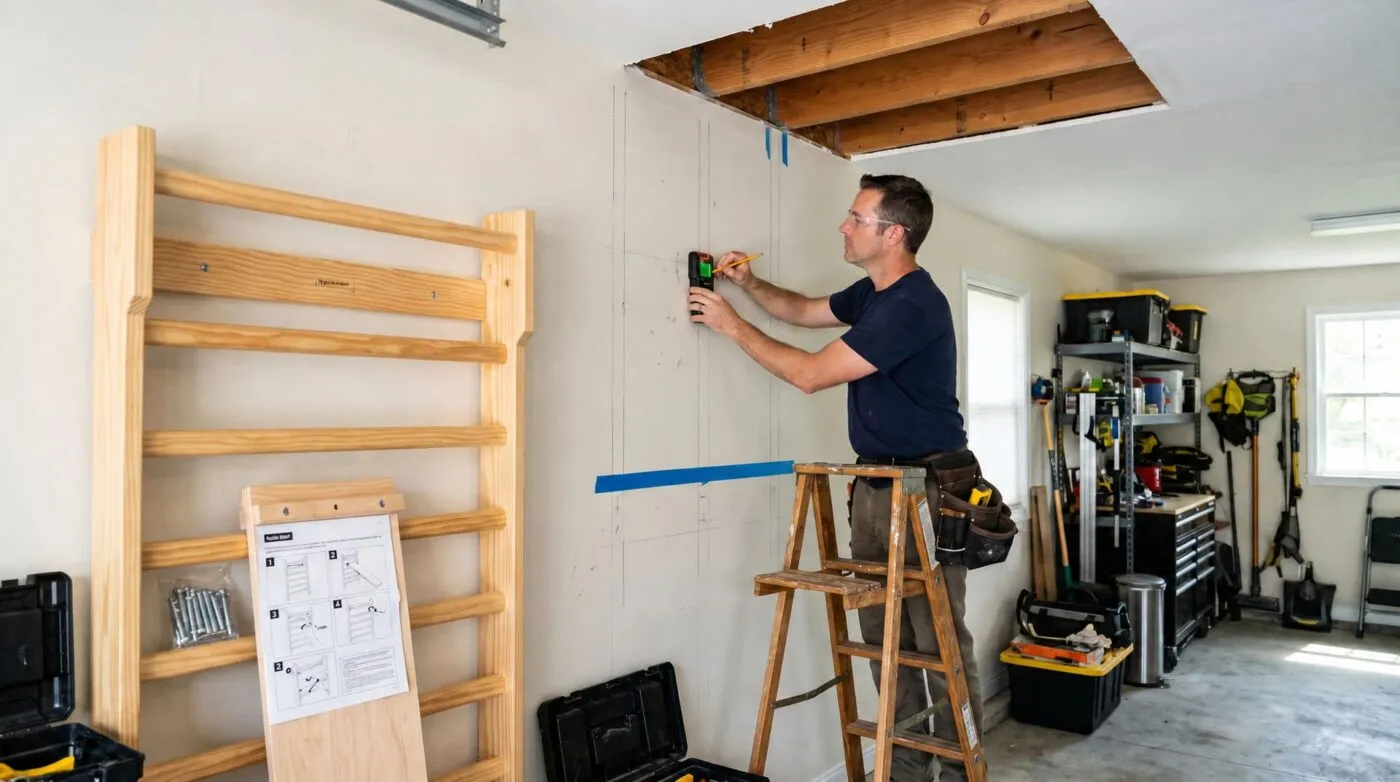
Ensure there are no electrical wires, pipes, or structural voids in the wall.
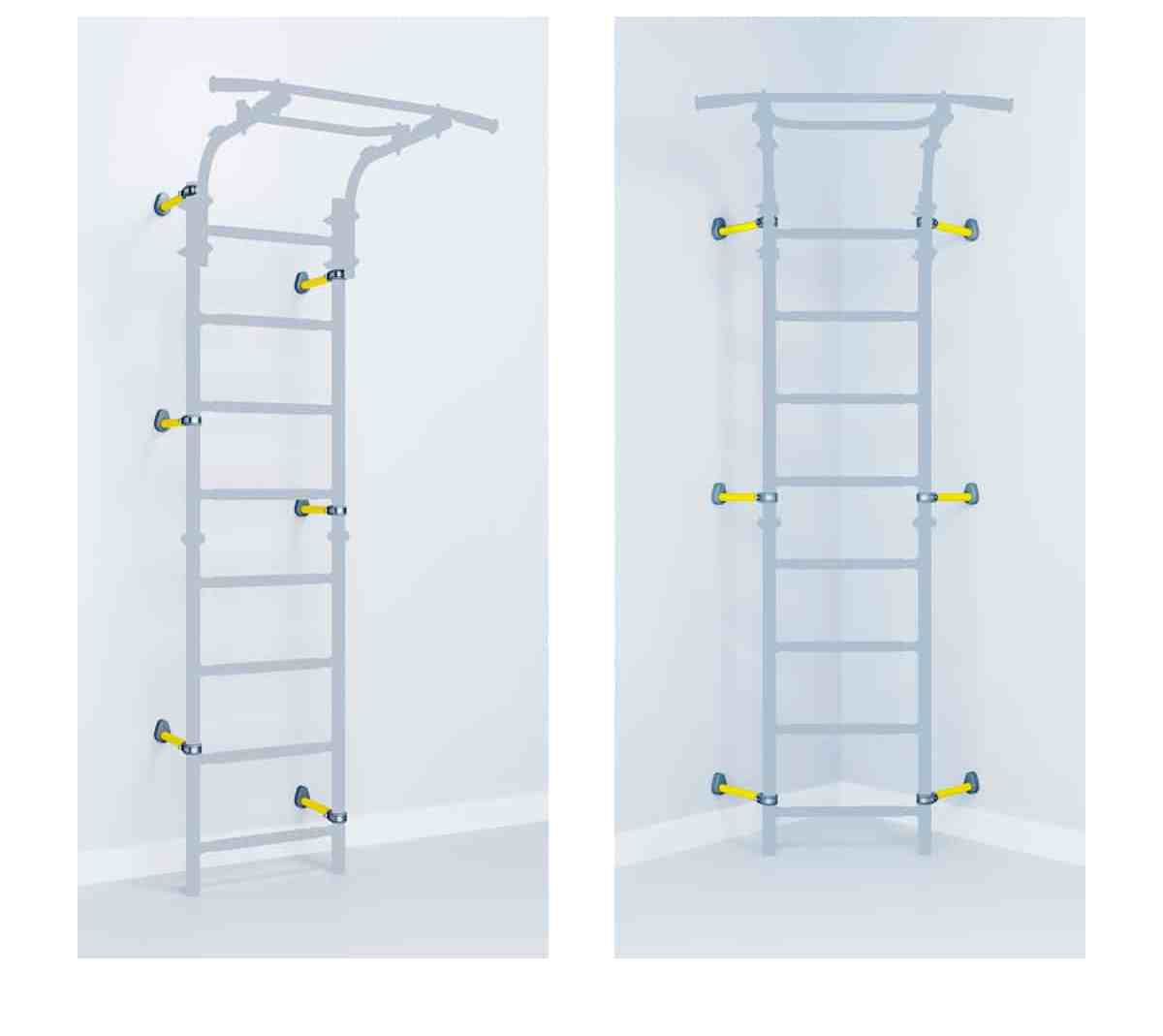
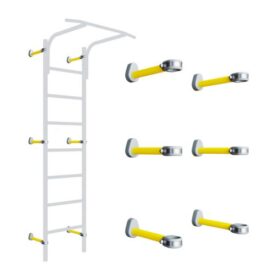
It is worth paying attention to practical design features. In some models, such as the Next 1 and Next 3 sets, the wall mounting points can be adjusted vertically, allowing you to choose safer and more optimal installation locations.
FAQ