Dec
Physical activity is a topic that is brought up very often. Many studies and articles refer to women who are pregnant (they mostly focus on how important properly measured physical activity is for the health of both the mothers and their babies). Much less attention is given to a later period – that is, after the birth has already taken place. This certainly needs to change, because appropriately selected physical activity contributes to a much faster return to full strength – both physical and mental.
Are exercises during the postpartum period safe?
They are not only safe but actually recommended. Of course, only if there are no medical contraindications and if the postpartum period is progressing normally. Intensive and long workouts are not a good idea, but simple exercises lasting several minutes will definitely not cause harm. It is important to work on different parts of the body, not just one. More attention should certainly be paid to the abdominal muscles and the pelvic floor. Regular and well-selected exercises will help the uterus contract more quickly. They will also have a positive effect on muscle tone. In addition, they will reduce back pain and lower the risk of complications. Better well-being and a quicker return to previous fitness are further benefits one can expect.
Days 6–14 after childbirth – what is allowed at this stage?
At this time, the intensity of pelvic floor exercises can be increased. Starting from about the 6th day of the postpartum period, exercises can be performed in any starting body position. The pace should be slow or moderate (depending on individual capabilities). Their main goal is to strengthen the pelvic floor and abdominal muscles and to restore proper posture. At this stage of recovery, exercises involving the lower limbs should be avoided, as they may deepen lordosis and increase the already high tension of the back muscles.
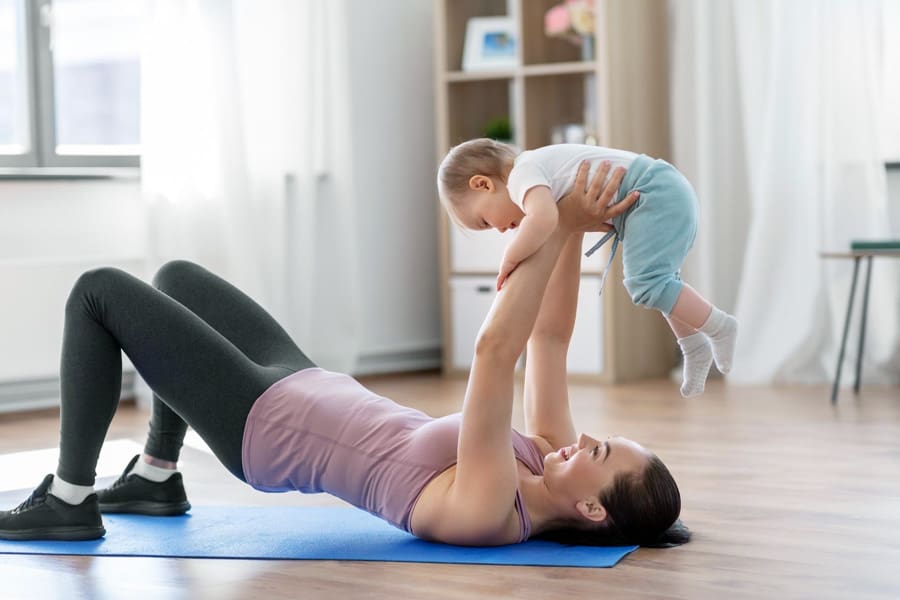
Other recommended (example) exercises
- The lower limbs should be bent at the knee and hip joints. At the same time, the hands should be clasped behind the neck. The required position is sitting with a twist of the torso to the right (the left elbow should touch the right knee), followed by a return to the starting position and a repetition of the exercise – this time to the left side.
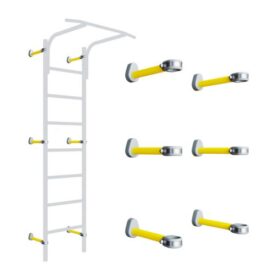
- The starting position is lying on the back (you can hold the rungs of the wall bars with your hands). The lower limbs should be bent at the knee and hip joints. The exercise involves moving the bent knees to the left and to the right.
- Lying on your back, the upper limbs should be bent to the sides. The lower limbs should then be lifted above the ground. The exercise consists of performing scissor-like leg movements – horizontally and vertically.
- The starting position is kneeling on all fours facing the wall bars. The right lower limb must be lifted backward, and then circles should be drawn – outward and inward. After returning to the starting position, the exercise can be repeated with the left leg.
- Standing with legs apart, the upper limbs should be raised upward. Then a forward bend of the torso should be performed, followed by a return to the standing position.
Kegel exercises after childbirth
- The best results are achieved through regularly repeated muscle contractions. At first, it is recommended that these exercises be performed lying down. You should lie on your back with your legs directed toward the swedish ladder so that, after hooking your feet onto the lowest rung, the legs remain slightly bent at the knees. Then the muscles should be gradually contracted. It will be much easier to do this if the head is lifted toward the knees. During relaxation, a slow return to the starting position is required.
- A more advanced Kegel exercise, which engages the pelvic muscles more strongly, involves standing with your back to the wall bars and your feet slightly apart. You should grasp a rung at head level with your hands. The exercise consists of tightening the Kegel muscles until the arms are fully extended at the elbows. Hold this position briefly, then relax the muscles and return to the starting position.
Exercises for abdominal muscles
- Lying on your back, the limbs should be bent at the knee and hip joints. After stabilizing the lower limbs, the upper limbs can be stretched forward. Then move into a sitting position and return to the starting position.
- Lying on your back, the lower limbs should be bent at the hip and knee joints. The upper limbs should be placed along the torso. The exercise consists of moving the lower limbs to the right and to the left.
The number of repetitions for each exercise should be adjusted to the fitness level and individual capabilities of each woman. It is best to start with short workouts lasting only a few minutes and to increase the number of repetitions of selected or all exercises each day.